
A Work Permit Is Not Self-Reliance: Reflections from the Thailand–Myanmar Border on the Meaning of Safety
This World Refugee Day, the slogan “Until everyone is safe” felt more like a question than a celebration. Are we measuring the right things?
As Thailand recognizes the one-year anniversary of its landmark August 26, 2025 Cabinet resolution granting refugees formal access to work today, the Refugee Self-Reliance Initiative (RSRI) is offering a timely new perspective on what this milestone means and what it does not.
In a new op-ed, “A Work Permit Is Not Self-Reliance,” RSRI Partnerships and Research Coordinator Su Myat Thwe reflects on the first year of implementation from the Thailand–Myanmar border. While recognizing the policy as a significant step forward, the piece argues that employment alone cannot deliver genuine self-reliance without the legal protections, public services, and social protection systems that enable displaced households to live safely and with dignity.
At a time of shrinking humanitarian budgets and growing pressure to reduce aid dependency, this article challenges policymakers and practitioners to look beyond employment as the primary measure of refugee self-reliance. Instead, it calls for long-term investment in health, education, financial inclusion, and social protection—lessons that extend well beyond Thailand to refugee-hosting countries worldwide.
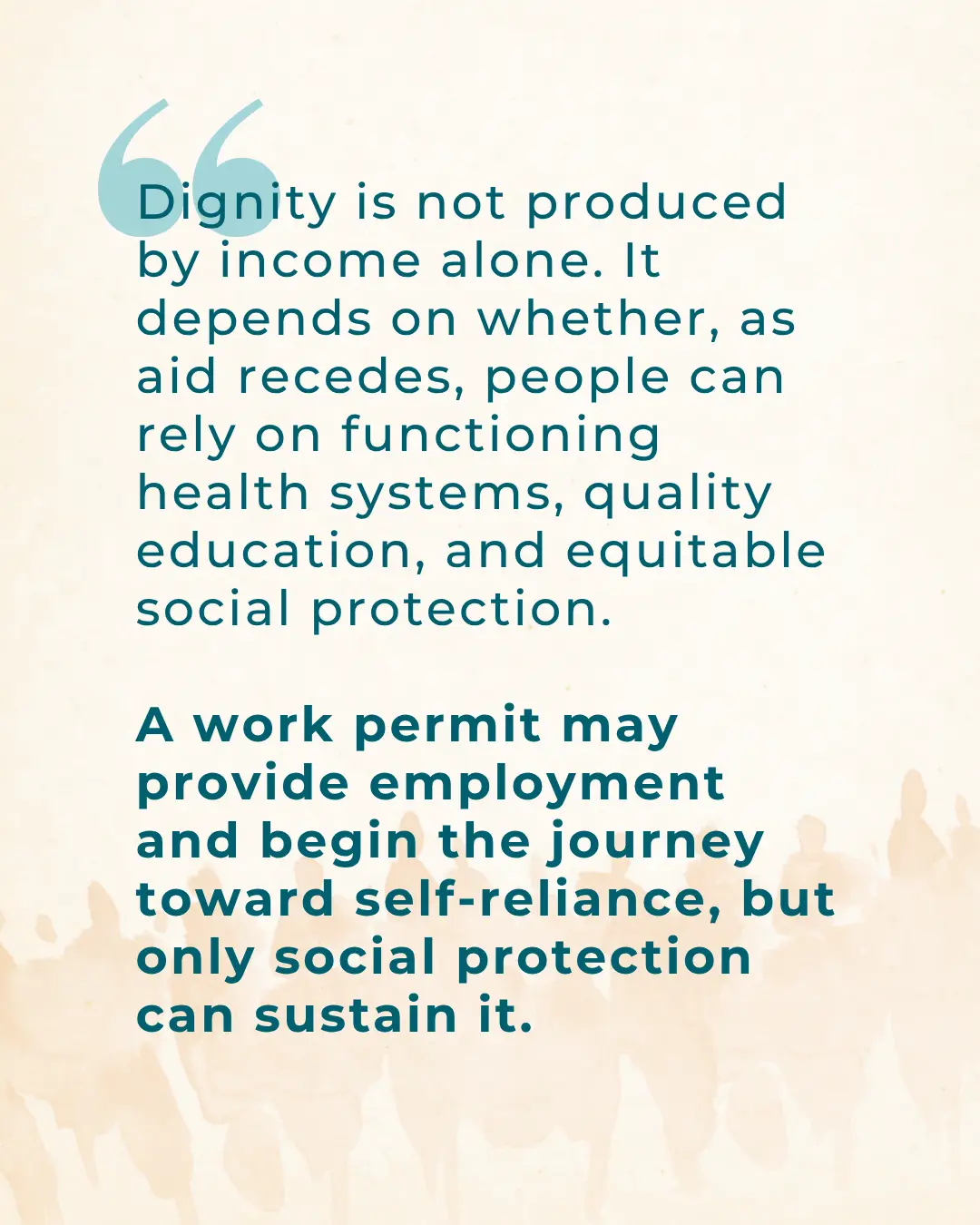 |
With Thailand's one-year work permit pilot approaching its conclusion, refugees are asking what comes next. If self-reliance is measured only by the ability to work, we will have answered the wrong question. The real measure is whether people have the conditions to live safely and with dignity, protected enough to build a future rather than simply survive the present.
|