Toggle main navigation



Cover photo credit: @World Vision
The first refugee family I ever worked with did not arrive in my life through a humanitarian response, global advocacy action, or a legal text.
They arrived through a community health centre in southern New Jersey, early in my career, when I was working as an outreach worker supporting migrant and seasonal farmworkers. Most of the families we served had come for the blueberry season — a fast, labor-intensive crop that depends on people who have very little security or say in where they go next. I supported workers from Haiti, other countries in Central America, and Mexico, and their extended families on the move. They spoke Spanish, Haitian Creole, and Indigenous languages that many systems around them could not understand.
Their lives were — and still are — extraordinarily hard. They worked long hours, moved often, and lived with uncertainty, navigating health crises, substandard housing, horrific and often exploitative work conditions, while trying to support their families from the margins. Much of my work was practical: basic patient intake, transportation and interpretation, and referrals to migrant education and legal aid. Our role was to translate systems that were not designed for them and to solve whatever urgent problem had landed on their doorstep that day, often relying on local churches and networks.
Most of the farmworker families, despite the hardship, were part of supportive communities. Even without our help, they could find someone who spoke their language, enjoy a familiar meal, or worship together. These folks, especially after many seasons on the migrant trail, knew the rhythm of the season and came to understand what it meant to live and work that way.
The refugee family I was introduced to and asked to support was different.
They were not farmworkers. They had fled conflict and trauma. They were far from home in a way that was not temporary or seasonal. They had no nearby community that spoke their language or understood where they had come from. The father could not drive, and in a rural area with limited bus service that meant depending on a system that barely worked for anyone, let alone for a newly arrived family trying to rebuild a life. I remember this widowed dad as profoundly sad — beaten down, isolated, and afraid. I did not have the words then to describe what I now recognise may have been depression, grief, or the long shadow of trauma.
They were, in legal terms, safer than many of the undocumented families we served. But in daily life, they seemed more alone, more vulnerable, and potentially more marginalised in their new surroundings.
I remember, with great humility now, how much I did not understand.
I did not understand what they were entitled to. I did not understand why they received certain kinds of support and not others. I did not understand the difference between someone who had migrated for work, someone seeking asylum, and someone formally recognised as a refugee. I did understand what exclusion and living in shadows looked like. And I sadly understood just how hard it was to get migrant children vaccinated and into school. But I did not understand the architecture of protection — the laws, principles, and commitments created because the world had learned, through catastrophic failure, what happens when people fleeing persecution are turned away.
And I sometimes wonder: if I knew so little then, how many people today really understand what the 1951 Refugee Convention is, what it protects, and why it matters?
More than two decades later, working in the international development and humanitarian sector, I’ve supported and visited some of the world’s largest displacement crises, including most recently Sudan and South Sudan, Kakuma Refugee Camp in Kenya, and refugee responses in Ethiopia. Through these encounters, I’ve come to understand the 1951 Refugee Convention very differently.
It is not, for me, simply an important legal instrument. It is the embodiment of a moral promise: that people who flee persecution, conflict, and violence should not be abandoned at the border; that they should not be sent back into danger; and that their dignity does not disappear when they lose their home.
Seventy-five years ago, in the aftermath of the Second World War, nations came together to respond to a displacement crisis that had exposed the terrible consequences of indifference. The 1951 Convention Relating to the Status of Refugees established a common understanding of who a refugee is and what protection they are owed. Its 1967 Protocol later removed the original geographic and time limitations, making the framework universal.
Together, these instruments helped shape the modern refugee protection system. They affirmed that protection is not simply an act of charity. It is a set of rights and responsibilities shared by the international community.
What does the Refugee Convention protect?
For many people, the term “refugee” is familiar, but the meaning of refugee protection is less well understood. At the heart of the 1951 Refugee Convention and its 1967 Protocol is the principle of non-refoulement: that a person should not be forced back to a country where they face persecution, serious harm, or threats to their life and freedom.
But refugee protection does not stop there. The Convention also recognises rights that make survival, dignity, and rebuilding possible, including:
These protections may sound technical, but they are not. They are the difference between a child being able to enroll in school or being left out and left behind. They are the difference between a parent being able to work legally or being forced into exploitation. They are the difference between a family having papers that prove who they are or living in constant fear of detention, deportation, or disappearance from the system. They are the difference between being seen as a person with rights and being treated as a problem to be managed.
That responsibility is no less urgent now.
At the end of 2025, 117.8 million people were forcibly displaced worldwide — more than 1 in 70 people worldwide. Of these, 41.6 million were refugees. Children accounted for 39% of the global refugee population, and between 2018 and 2025, 2.4 million children were born as refugees. Many will spend much, if not all, of their childhoods in displacement, as crises become more protracted and political and diplomatic solutions lag.
Most refugees do not travel far from home. They remain in neighbouring countries — often countries and communities that are themselves facing poverty, debt, climate shocks, conflict, and weak public services. This is one of the least understood realities of refugee protection. The countries carrying the greatest responsibility are often not the wealthiest. They are often the closest, the most affected, and the least resourced.
Earlier this year in Renk, South Sudan, near the border with Sudan, I saw again what these numbers mean in human terms.
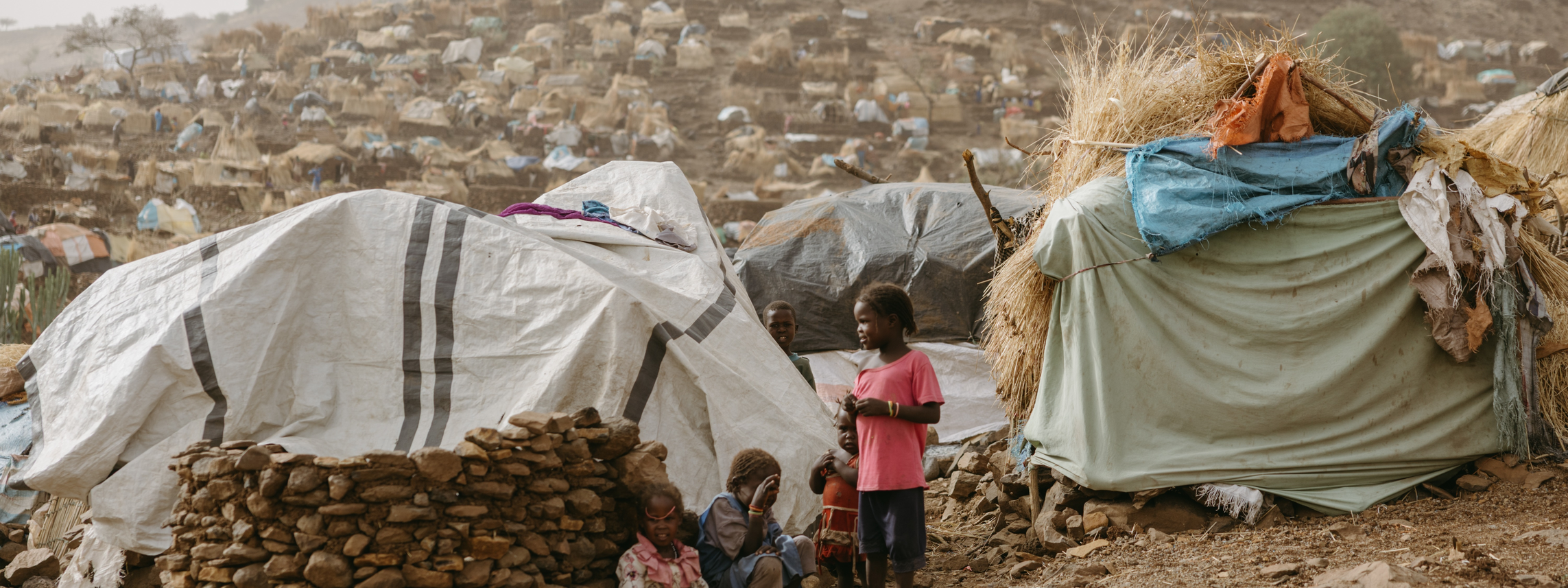
The reception centre there was built for thousands fewer people than it was hosting. New families arrived each week — South Sudanese returnees, deportees, Sudanese refugees, women separated from children, children separated from families, people who had already fled once and were now facing another uncertain future. The area was described as calm at the time, but fighting had occurred close by, and the hospital received patients with conflict-related injuries. Humanitarian teams were doing what they could: urgent health screening, vaccinations, support for separated and unaccompanied children, assistance for survivors of gender-based violence, and the basic work of receiving people who had arrived with almost nothing.
In places like Renk, the Refugee Convention is not abstract. It lives or dies in the decisions made at border points, reception centres, registration desks, health centers, schools, and government offices. The legal framework matters when a child needs documentation. It matters when a mother fears being forced back into danger. It matters when a family needs access to health care, when a girl needs to return to school, when a father needs the right to work, and when a child needs to be seen not as a burden or threat, but as a child.
This is why the erosion of support for refugee rights should concern us deeply.
The danger of this moment is not only that refugee needs are growing. It is that the political and moral consensus behind refugee protection is weakening just when it is most needed.
Public attitudes remain complicated. Many people still believe those fleeing war or persecution should be able to seek refuge in another country. In a 2026 Ipsos survey of 20,000 individuals from 29 countries, two thirds of participants agreed that seeking refuge across borders should be an option for people in danger. 72% of respondents from the United States also expressed support for refugee protections, and countries such as France and Japan saw significant increases in backing for refugee rights. These numbers matter. They tell us that the instinct toward protection has not disappeared. But fear, misinformation, economic pressure, and political rhetoric are also driving support for closing borders and weakening asylum systems. In too many places, refugees are now spoken about less as people in need of protection and more as threats to be deterred, contained, or pushed elsewhere.
At the same time, many governments are increasingly pursuing policies that shift responsibility away from themselves: restricting access to asylum, externalising processing, reducing resettlement pathways, and placing even greater pressure on neighbouring countries already carrying the heaviest share of responsibility. These shifts may sound procedural, but their consequences are very real. When protection pathways close, families do not stop fleeing danger. Instead, they are forced to take more dangerous routes. Girls and boys become more vulnerable to trafficking, exploitation, family separation, detention, and return to unsafe places.
The humanitarian system is under severe strain. Funding cuts are reducing services for displaced children and families. Food rations have been cut. Classrooms are becoming more crowded while doubling as accommodations to house displaced families. Health care, mental health support, child protection, gender-based violence services, and legal assistance have been scaled back. The results are that families, who were already living at the edge, are now pushed over it.
Resettlement — one of the few durable solutions available to refugees who cannot safely return home or build a secure future where they first fled — has plummeted. In 2025, only about 37,000 refugees departed to a new country through UNHCR-assisted resettlement, down from more than 116,000 the year before. For families waiting in camps, cities, and border areas, this is not just a statistic. It is the closing of a door — a ray of hope extinguished.
This is why we cannot treat the 75th anniversary of the Refugee Convention as a ceremonial milestone. Anniversaries can make commitments sound secure, as if they belong safely to history. But the Convention cannot effectively protect refugee rights on its own. It depends on political will, public understanding, legal accountability, humanitarian resources, and moral courage.
We cannot take the Refugee Convention for granted.
Across most of the world’s faith traditions, the call to welcome the stranger is deeply rooted. Hospitality, protection, compassion, and solidarity with those forced to flee or far from home are not fringe commitments. They are central moral teachings shared across cultures and religions. For Christians, this call is especially clear in Scripture’s repeated command to welcome the stranger, protect the vulnerable, and recognise the image of God in every person.
Pope Leo XIV’s theme for the 2026 World Day of Migrants and Refugees, “Even just one of these children,” draws from Jesus’ words in Matthew 18:5: “Whoever welcomes one such child in my name welcomes me.” This is not a sentimental message. It is a demanding one. It reminds us that the measure of our societies is not how we treat people when it is easy, but whether we defend the dignity of those who arrive tired, traumatised, poor, undocumented, misunderstood, or afraid.
I think about the refugee family and others I met in southern New Jersey. I wish I had understood more then. I wish I had known how to explain that the support they received was not charity or favouritism. It was part of a hard-won international commitment to protection. I wish I had been better equipped to help others see the difference between a label imposed on a person and a status that can safeguard their life and give them a future.
But perhaps that is also where many of us must begin: by learning again what the Refugee Convention means and why it still matters, and by helping others to also understand.
Children fleeing violence should not have to prove their worthiness before they are protected.
Families who have lost everything should also not lose their rights.
Protection is not an act of generosity by the powerful. It is a responsibility rooted in law, humanity, and — for many of us — faith.
On the 75th anniversary of the 1951 Refugee Convention, we need more than commemoration. We need renewed conviction. We need governments to uphold their obligations. We need donors to sustain life-saving support. We need faith leaders, advocates, media, communities, and citizens to reject language that dehumanises people who flee. We need to talk about refugee protection in our places of worship, schools, homes, and public life.
And most of all, we need to remember that behind every legal definition is a person. Behind every statistic is a child, a parent, a family, a future.
The promise of the Refugee Convention is not only that people fleeing danger may cross a border. It is that, when they do, the world will still recognise their humanity.
About the author:
Amanda Rives Argeñal is the Senior Director, Humanitarian Policy, Advocacy and Partnerships. She oversees World Vision’s global humanitarian advocacy, working closely with UN partners and other humanitarian stakeholders and consortia, including WFP, UNHCR, OCHA and ICVA. Before joining the global Disaster Management team, Amanda served as Regional Advocacy and Policy Director for the Middle East and Eastern Europe Region based in Jordan. Her portfolio included advocacy on fragile and humanitarian contexts, the humanitarian-development-peacebuilding nexus, children on the move, and children in armed conflict. One of World Vision’s leading subject-matter experts on child protection, she continues to advance a global agenda of community-based child protection systems, including engagement with faith leaders on child protection in humanitarian contexts.
Amanda joined World Vision in 2009 as Regional Advocacy Director, LAC region, where she oversaw child protection programming and advocacy in 14 countries, supporting and deploying to humanitarian emergencies, including Haiti, the Northern Triangle, and the Venezuela crisis. A former US Peace Corps volunteer, Amanda holds a BA in international affairs from George Washington University and an MA in international development from American University.